History
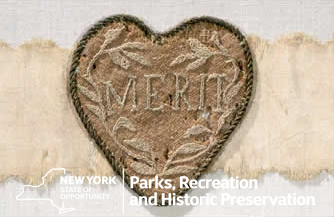
The award known as the Purple Heart has a history that reaches back to the waning days of the American Revolution. The Continental Congress had forbidden General George Washington from granting commissions and promotions in rank to recognize merit. Yet Washington wanted to honor merit, particularly among the enlisted soldiers. On August 7, 1782, his general orders established the Badge of Military Merit:
This award was open only to enlisted men (Privates, Corporals and Sergeants) and granted them the distinction of being permitted to pass all guards and sentinels as could commissioned-officers. The names of the recipients were to have been kept in a "Book of Merit" (which has never been recovered).
At the present time there are three verified recipients of the Badge of Military Merit: Sergeant Elijah Churchill, 2nd Continental Dragoons; Sergeant William Brown, 5th Connecticut Continental Line Infantry and Sergeant Daniel Bissel, 2nd Connecticut Continental Line Infantry.
Washington stated that the award was to be a permanent one, but once the Revolution ended, the Badge of Military Merit was all but forgotten until the 20th century.
General John J."Blackjack" Pershing suggested a need for an award for merit in 1918, but it was not until 1932 that the modern Purple Heart was created in recognition of Washington's ideals and for the bicentennial of his birth. General Order #3 announced the establishment of the award:
"... By order of the President of the United States, the Purple Heart, established by General George Washington at Newburgh, August 7, 1782, during the War of the Revolution is hereby revived out of respect to his memory and military achievements.
By order of the Secretary of War:
Douglas MacArthur
General, Chief of Staff
On May 28, 1932, 136 World War I veterans were conferred their Purple Hearts at Temple Hill, in New Windsor, NY. Temple Hill was the site of the New Windsor Cantonment, which was the final encampment of the Continental Army in the winter of 1782-1783. Today, the National Purple Heart continues the tradition begun on these grounds in 1932, of honoring those who have been awarded the Purple Heart.
The Purple Heart has undergone many changes with respect to the criteria for being awarded. At first, the Purple Heart was exclusively awarded to Army and Army Air Corps personnel and could not be awarded posthumously to the next of kin. In 1942, President Franklin Roosevelt signed an executive order allowing the Navy to award the Purple Heart to Sailors, Marines, and Coast Guard personnel. Also in that year, the Purple Heart was made available for posthumous awarding to any member of the Armed Forces killed on or after December 6, 1941.
Originally the Purple Heart was awarded for merit. Being wounded was considered to be one type of merit. With the creation of the Legion of Merit in 1942, the award of the Purple Heart for merit became unnecessary and was therefore discontinued. Currently, the Purple Heart, per regulation is awarded in the name of the President of the United States to any member of the Armed Forces of the United States who, while serving under competent authority in any capacity with one of the U.S. Armed Services after April 5, 1917 has been wounded, killed, or has died after being wounded by enemy action.
Purple Heart Timeline
-
General Order #3, signed by General Douglas MacArthur creates the modern Purple Heart -
Executive Order 9277 by President Roosevelt authorizes the Purple Heart for all branches of service and authorizes posthumous awards, back dated to 6 December 1941. -
Executive Order 10409 authorizes posthumous Purple Heart awards to Navy, Coast Guard or Marine Corps personnel killed on or after April 5, 1917. (The Army and the Air Force are not formally included until 1962) -
Executive Order 11016 authorizes civilian Purple Hearts for those under competent military authority; it also authorized posthumous awards to those killed on or after April 5, 1917 upon application by their next of kin. -
Executive Order 12464 authorizes the Purple Heart to be awarded for acts of terror as well as for wounds or death resulting from US Armed Forces personnel acting as part of a peacekeeping force outside of the United States or its territories. -
Purple Hearts may be awarded for wounds or death resulting from "friendly fire" (unless it from willful misconduct).US Code 10 section 1129, per PL 103-160 -
PL 104-106 Section 521 expands Purple Heart eligibility to POWs wounded during capture or during captivity prior to April 25, 1962. (Policy interpretations had considered, and awarded the Purple Heart, on case by case bases to POWs captured after April 25, 1962) -
Effective this date, the Purple Heart is limited to American military personnel and civilian awards are eliminated. -
The Department of Defense authorizes the Purple Heart for POWs (after December 7, 1941) who subsequently die in captivity. Information is from the Memo this date to secretaries of the military departments. -
The Department of Defense announces a standard to evaluate a wounded individual for a Purple Heart resulting from a "non-penetrating wound". -
The Department of Defense announces that eligibility has been extended to those wounded or killed by certain kinds domestic terrorist activities.
"... The General ever desirous to cherish virtuous ambition in his soldiers, as well as to foster and encourage every species of Military merit directs whenever any singularly meritorious action is performed, the author of it shall be permitted to wear on his facings, over his left breast, the figure of a heart in purple cloth or silk edged with narrow lace or binding."